What Botox actually does, in plain terms.
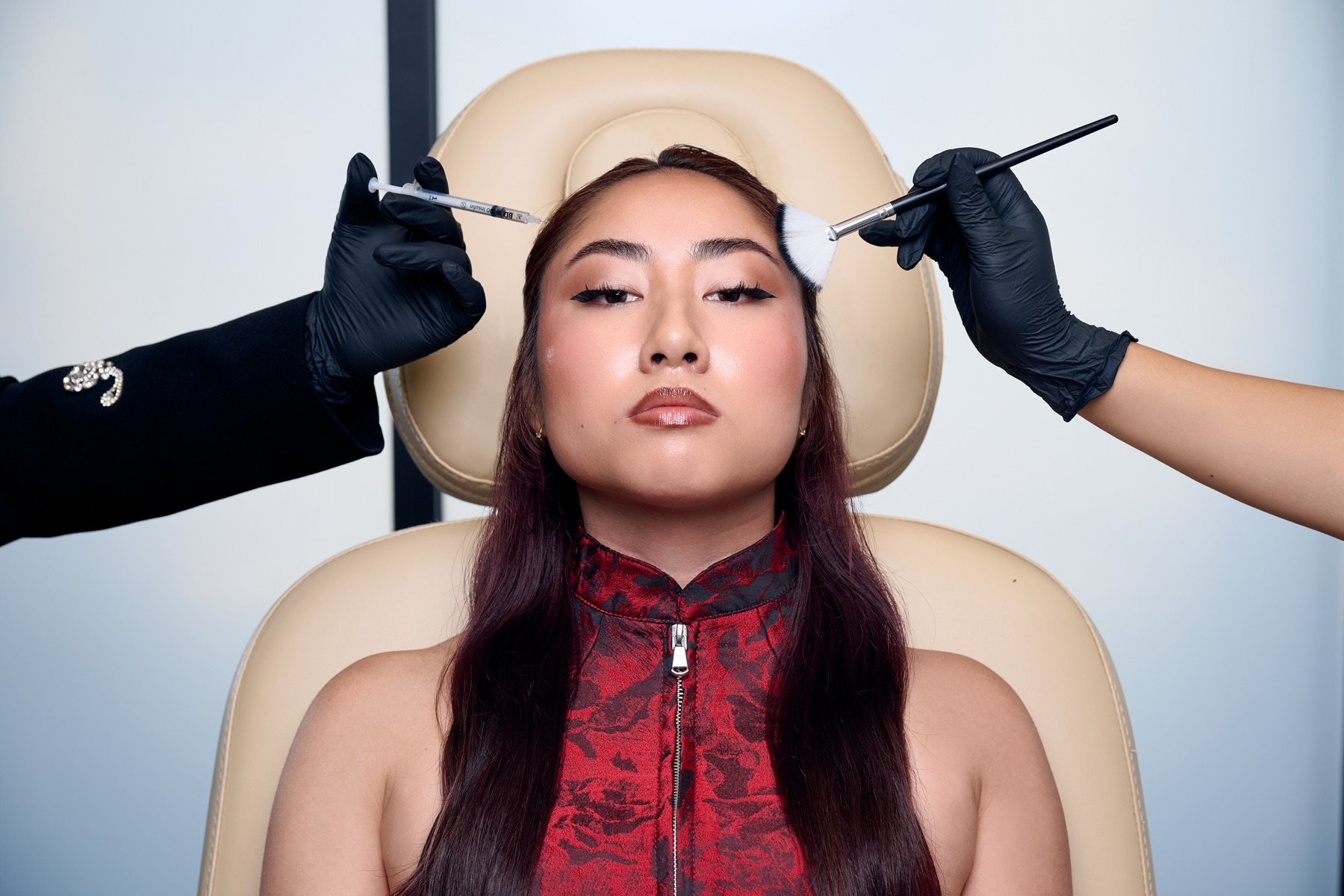
Botox, Dysport, and Daxxify are all neuromodulators. They share the same parent ingredient (botulinum toxin type A) and the same job: quieting the tiny muscle pulls that fold the skin above them into expression lines. The brand name on the vial is mostly a question of how fast it kicks in and how long it lasts. The technique, the dose, and the placement matter far more than the label, which is why two studios can hand you the same vial of the same product and you can leave with meaningfully different results.
We treat the dynamic lines first, the ones that show up when you laugh or squint, before the etched, at-rest creases do. Most of the requests we see at the studio are familiar: the 11s between the brows, the horizontal forehead lines, crow's feet, and the lip flip. We also place small, precise doses across the lower face, the jaw, the chin, and the neck for patients who want softening without losing the way their face moves.
What it is not: a filler. Neuromodulators do not add volume. They relax. If you are looking at a hollow temple or a thinning lip, you are looking at a different conversation. We will tell you so in the room, even if you came in asking for tox. The honest answer in the chair is part of how we want this studio to be different from the average tox-and-go room.
It is also not a permanent intervention. Results typically build over weeks and hold for a few months before muscle activity quietly returns. That is a feature, not a bug. The reversibility is one reason neuromodulators are a common starting point on a face that hasn't been treated before. If you do not love the result, you wait. The body resolves it. (Several of the applications on our menu — lip flip, micro-tox, jawline and trapezius work — are off-label uses of FDA-approved products, performed under medical direction.)